Medically reviewed by Dr. Priyesh Naik, Consultant, M.S. DNB, FMAS
Disclaimer: The information provided in this article is for educational purposes only and should not replace professional medical advice, diagnosis, or treatment. If you or a loved one are experiencing a medical emergency or severe withdrawal symptoms, seek immediate medical attention.
Alcohol dependence rarely announces itself with a sudden, dramatic crash. Instead, it creeps in through minor, almost invisible shifts in daily routine. According to comprehensive surveys by the Ministry of Social Justice and Empowerment, millions of Indians struggle with alcohol dependence, yet only a small fraction ever seek professional help from alcohol rehabs. Often, families brush off a heavy weekend, missing the quiet progression from casual drinking to a clinical disorder.
Understanding how alcohol alters behavior and brain chemistry can save a life. Here are the critical signs to watch for at home and in the workplace.
1. The “Just One” Illusion and Loss of Control
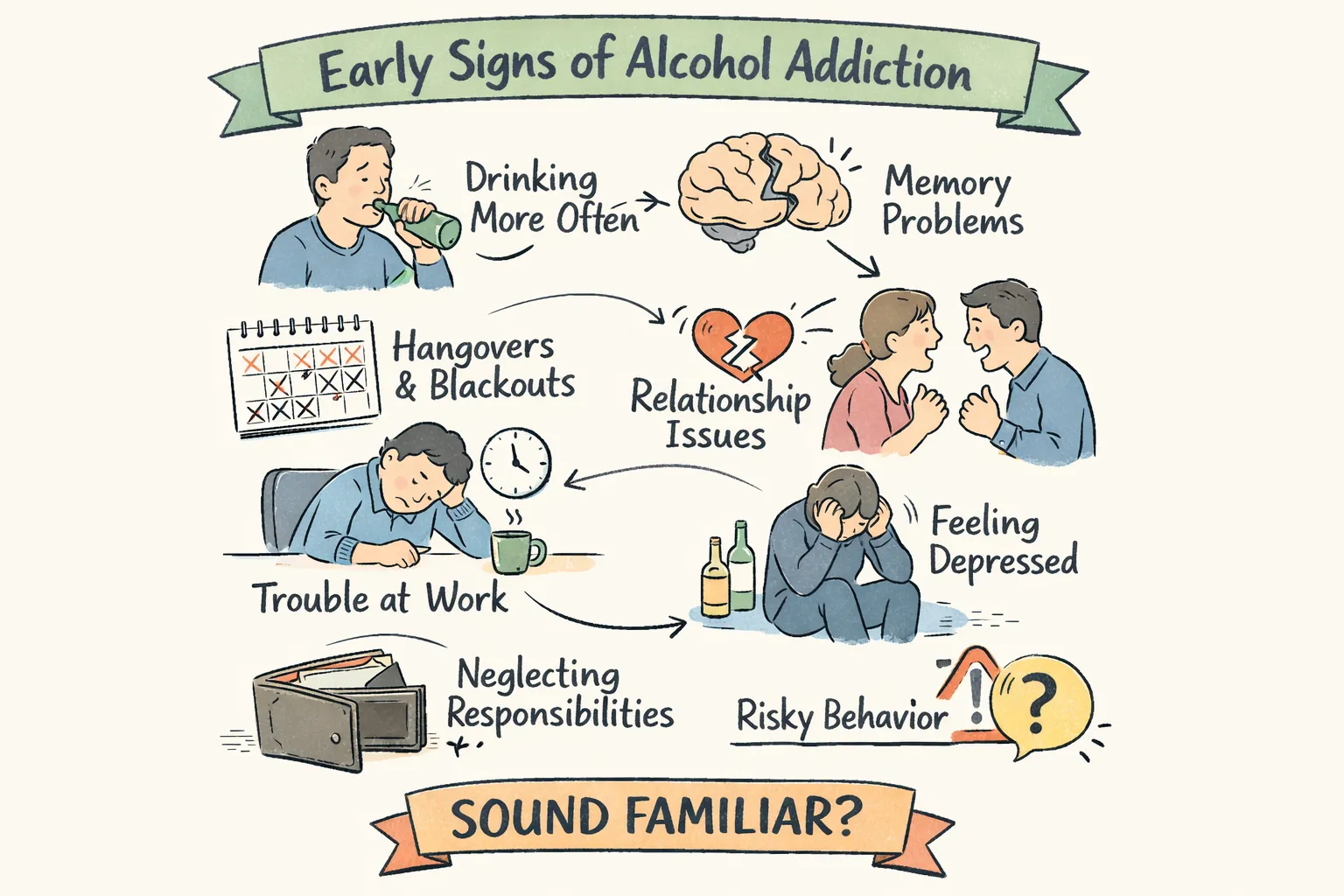
It almost always starts with a promise of “just one drink.” When that single peg routinely turns into a late-night session, behavioral control is already slipping. At the office, managers are often the first to notice the fallout: sliding productivity, unexplained morning absences, or an employee struggling to hold focus during meetings.
2. The Cycle of Failed Resolutions
Making strict rules—like “I will only drink on weekends”—and breaking them by Wednesday isn’t a moral failure; it is a symptom. The National Institute of Mental Health and Neurosciences (NIMHANS) identifies this persistent loss of control as a core clinical marker. Alcohol actively rewires the brain’s reward pathways, meaning willpower alone is eventually outmatched by chemical demand.
3. Fading Responsibilities and Isolation
When family functions, important work deadlines, or daily routines take a back seat to drinking, the addiction is structurally damaging the person’s life. Often, this neglect is paired with secrecy. Hiding bottles or drinking alone in a parked car strips away the social checks that keep us safe and prevents loved ones from offering early support.
4. The Escalation of Tolerance
If two drinks used to bring a buzz, but now it takes half a bottle, the central nervous system has adapted to heavy toxicity. This physical tolerance is dangerous. When accompanied by blackouts—where a person is awake, walking, and talking, but their brain completely stops recording memories—the brain is experiencing severe trauma, and urgent medical evaluation is necessary.
5. Dual Diagnosis: The Psychological Toll
Addiction rarely travels alone. Heavy drinking frequently intertwines with underlying anxiety, depression, or an overreliance on prescription medications to manage the resulting insomnia. This “dual diagnosis”—such as mixing alcohol with sleeping pills—creates a highly volatile chemical dependency. It deeply complicates recovery and requires specialized psychiatric care to untangle.
6. The Critical Withdrawal Window
The moment alcohol leaves a dependent body, the nervous system misfires. Early tremors, severe anxiety, and heavy sweating can start within 6 to 24 hours. However, as the All India Institute of Medical Sciences (AIIMS) notes, the window between 48 and 72 hours is critical. Look out for seizures, intense hallucinations, or extreme confusion. These are medical emergencies requiring immediate hospitalization, not a home remedy.
7. Morning Relief Drinking
Needing alcohol at 8:00 AM just to stop the hands from shaking is a severe red flag. The body is essentially entering withdrawal overnight. The morning drink isn’t for pleasure; it is used purely as medicine to function at a baseline level.
8. Shifting Passions and Neglect
Gym shoes gather dust. Beloved hobbies are abandoned. Personal hygiene often falls by the wayside. The individual hasn’t just lost interest; the addiction has forcefully reprioritized their brain. Obtaining and consuming alcohol becomes the central organizing principle of their day.
9. Drinking Through the Consequences
A doctor warns of dangerously elevated liver enzymes. A spouse threatens separation. The police issue a fine for drunk driving. Yet, the drinking continues. Continuing to consume alcohol despite staring directly at severe physical, legal, or interpersonal damage is the very definition of active addiction.
10. Taking Action Before the Breaking Point
Recognizing these patterns is the first step toward reclaiming a life. It is not about assigning blame; it is about breaking a destructive medical cycle before the damage becomes irreversible.
If you recognize these behaviors in yourself or a family member, the time to act is now. Document the specific changes you have observed and reach out to a specialized facility. Centers like Second Street Rehabilitation Centre in Mumbai provide medically supervised detox and comprehensive psychiatric support for patients across the country, safely addressing both alcohol use and co-occurring issues. Small, firm actions today can rewrite the future.